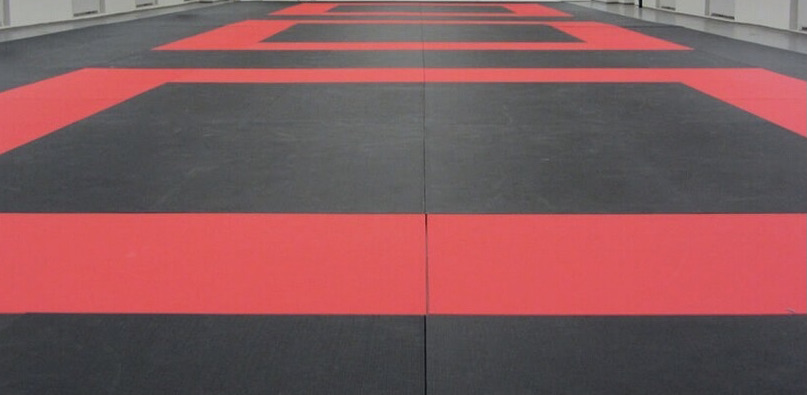
Jiu jitsu is such a blast. I just got back from a 07:00 training session.
After I roll (a.k.a spare) with higher belts, the question I always ask is “Do you have any suggestions for me?”
What’s interesting is that the blue belts, purple belts, and brown belts all gave specific technical answers to this question such as “Keep your elbows in tight,” or “ Make sure you have your touchpoints.”
On the other hand, the three black belts who I’ve rolled with gave a different answer but all said the same thing – They simply said “Spend more time on the mats.”
And it’s true – the more time you spend doing something, the more you’ll improve. That progress isn’t simply an illusion. It’s something that can be seen, it’s something that can be felt.
In the context of jiu jitsu for a white belt, that progress can be gauged by the number of times you get tapped out in a round by a higher belt. You realize that only three months ago, you were being tapped out four, five times per round by a particular purple belt. Now, three months later, against that same purple belt, you can go rounds being tapped just once or not even being tapped at all – That is progress. That is improvement.
And how good does that progress feel – knowing that it derives from a drive to improve, an eagerness to learn and plain old-fashioned hard work (ie. time spent on the mats).
Now, from my own teaching perspective, the question that comes to mind is what strategies can be used to get students to spend more time developing and honing their skills, whether that be with their studies or on the court?
Here are some of the ideas I came up with:
- Make it high energy and fun
It is the responsibility of the teacher to create a learning environment that is high energy and fun. You want your students walking away from each class feeling good about themselves and what they’ve just done, and if students connect positive sensations with the skills they’re learning, they’ll be eager to come back and learn some more.
- Give them the right challenge
You want your students to be engaged. That happens when they’re given the right challenge to test their skills, be that against themselves or others. If the student becomes overwhelmed by the daunting task in front of them, be that a math problem that’s just too tough or a white belt constantly being mauled by a black belt, the student will invariably feel discouraged to keep up with their efforts. Likewise, if the challenge becomes too easy, interest and the excitement associated with what they’re learning or training will be lost. When given the right challenge, however, one that is just beyond the student’s current capabilities, engagement will be at its peak. The chance for success and failure are both there, but neither is guaranteed, and that sparks the drive, the willingness to persevere and accomplish a task.
- Offer helpful support and build connections
Be there to answer student questions, and communicate with them about their progress and the next steps they can take to help best facilitate their personal development. If you can show your students you care and want the best for them, a relationship will be built where the student feels they can trust you and come to you when they need that bit of help and support – whether that be for something directly related to what you’re teaching them or for something else external. People want to be part of communities where they feel like they matter, where they feel heard and know others care about them – they’ll want to spend their time in that kind of environment, with people they know who care and want the best for them.
- Be a role model for what they could be
Not only will your students look to you for guidance, but they will also look to you for what they could be – the chess player they could become, the writer, the soccer player, the coach. Again, the responsibility falls on you to set the standards for your students, and to embody the values you stand for. You can’t just talk about it, you have to be about it. If your students see you showing up everyday, working hard, putting in the time and effort, some of that will inevitably rub off on them. It’s the actions one takes that leads them to become who they will become – this as a consequence of where one spends their time. Encourage them to come back out and study some more, train some more.
In summary, getting your students to spend more time developing their knowledge and skill base means being the teacher who provides students the opportunities to spend time in an environment that is fun, that pushes them to become better, that fosters and builds strong relationships, and that shows them who they can be if they’re willing to put the time in.
Whether it be from the perspective of teacher or student – it does come down to this: Spend more time on the mats.
 Andres E. Findlay
Leave a comment